
Korean Bibimbap: A Colorful Rice Bowl to Make at Home

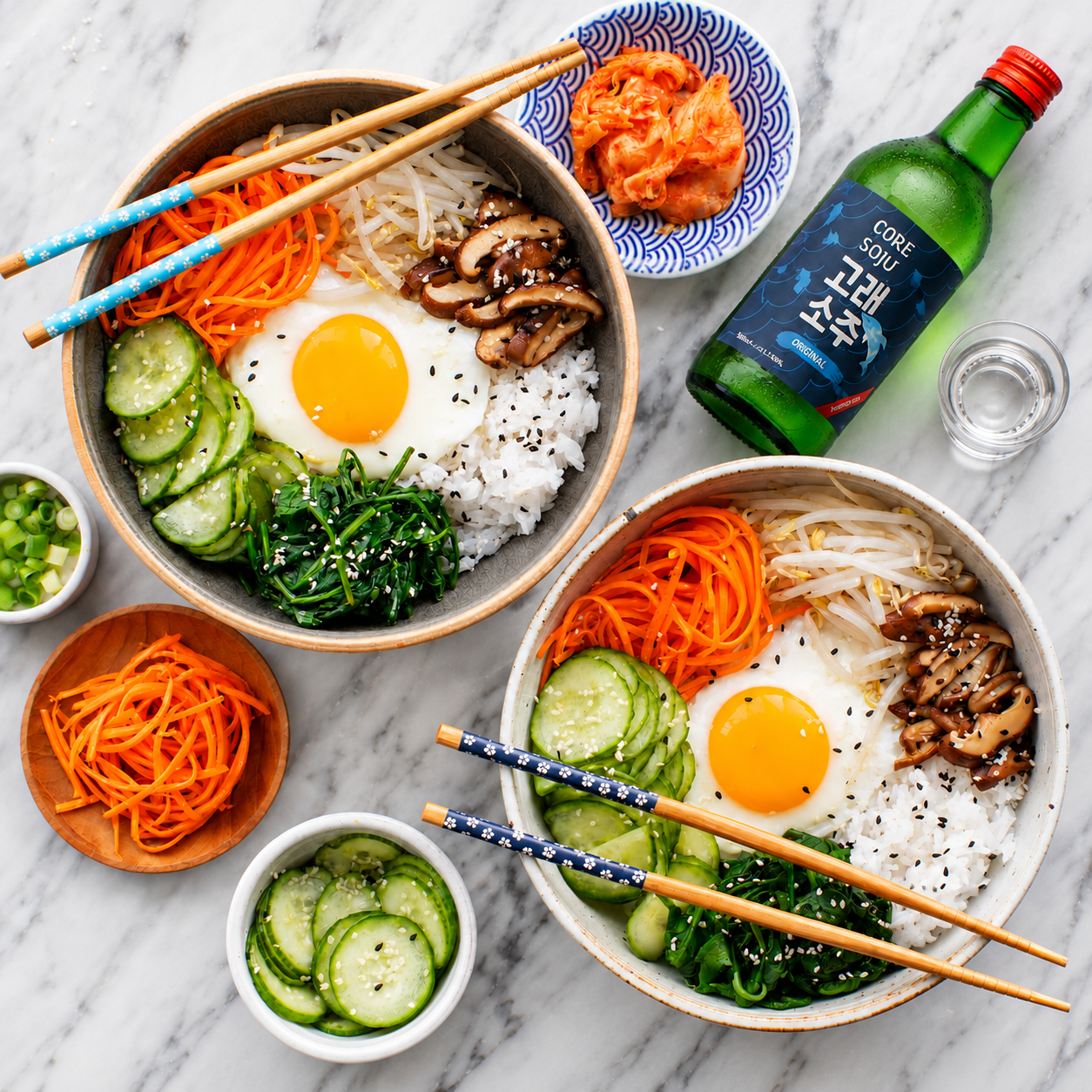
Korean Bibimbap: A Colorful Rice Bowl to Make at Home
Fresh vegetables, warm rice, a fried egg, and a spicy gochujang sauce—bibimbap brings contrasting flavors and textures together in one satisfying bowl. This meat-free version is simple to prepare and served with kimchi on the side.
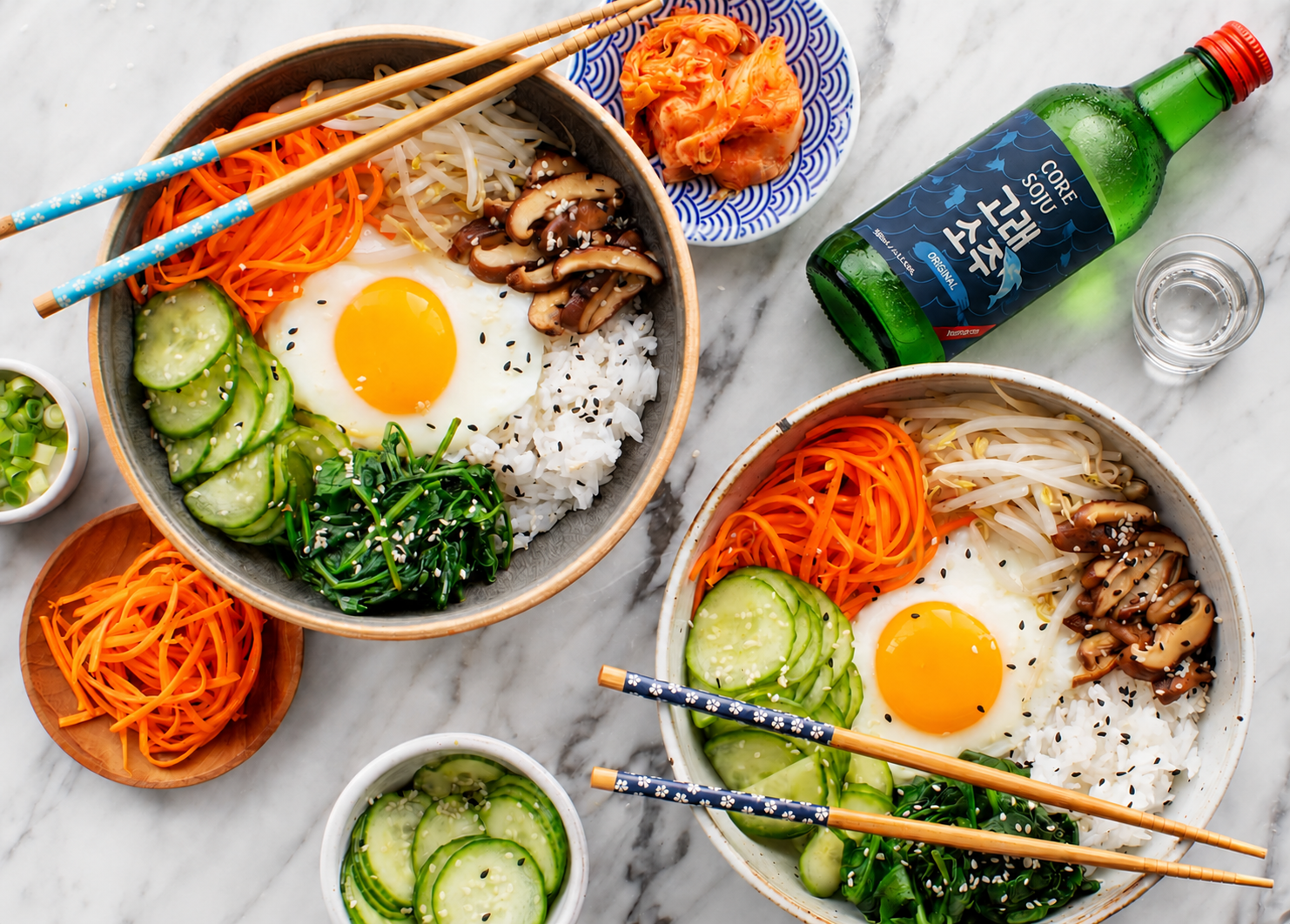
Fresh, colorful and comforting
Bibimbap brings together separately prepared vegetables, fluffy rice, a fried egg, and a tangy, spicy sauce. Arrange everything in your bowl, then mix before eating to enjoy every flavor in every bite.
For the Bowls
Everything you need to build two colorful Korean rice bowls.
- 150 g uncooked short-grain rice
- 2 eggs
- 1 medium carrot, cut into thin matchsticks
- ½ cucumber, thinly sliced
- 150 g bean sprouts
- 150 g fresh spinach
- 100 g shiitake mushrooms, sliced
- 2 garlic cloves, minced
- 2 teaspoons soy sauce
- 2 teaspoons toasted sesame oil
- 1 tablespoon neutral cooking oil, plus extra for the eggs
- Salt, to taste
- Sesame seeds, for garnish
- Kimchi, to serve
For the Bibimbap Sauce
Whisk the ingredients into a thick but pourable gochujang sauce.
- 2 tablespoons gochujang (Korean red chili paste)
- 1 tablespoon rice vinegar
- 1 teaspoon toasted sesame oil
- 1 teaspoon sugar
- 1–2 tablespoons water, to thin as needed
Prepare the Rice, Sauce & Cucumber
Cook the Rice
Rinse the rice and cook according to the package instructions. Keep warm.
Make the Sauce
Stir together the gochujang, rice vinegar, sesame oil, and sugar. Add enough water to make a thick but pourable sauce.
Prepare the Cucumber
Toss the slices with a small pinch of salt. Leave for 10 minutes, then drain any excess liquid.
Cook the Vegetables Separately
Sauté the Carrots and Mushrooms
Divide the neutral oil between batches. Sauté the carrots for 2–3 minutes with a pinch of salt. Sauté the mushrooms with half the garlic and the soy sauce for 4–5 minutes, until tender.
Prepare the Spinach and Sprouts
Blanch the spinach until wilted, then drain, cool, and squeeze out excess water. Cook the bean sprouts in boiling water for 3–5 minutes, until tender, then drain. Season each separately with 1 teaspoon sesame oil, a little of the remaining garlic, and salt.
Fry the Eggs & Assemble
Fry the Eggs
Heat a little oil in a frying pan and cook the eggs to your preferred doneness.
Assemble the Bowls
Divide the warm rice between two bowls. Arrange the carrots, cucumber, mushrooms, spinach, and bean sprouts over the rice. Top each bowl with an egg and a sprinkle of sesame seeds.
Serve & Mix
Bring Everything Together
Serve with the gochujang sauce and a small bowl of kimchi. Add sauce to taste, then mix everything together before eating.
Mix just before eating to combine the warm rice, vegetables, fried egg, and spicy sauce in every bite.
The Perfect Bibimbap Bowl
Warm Rice
Start with freshly cooked short-grain rice as the base of each bowl.
Fresh Vegetables
Arrange the carrot, cucumber, mushrooms, spinach, and bean sprouts separately.
Fried Egg
Top each colorful bowl with an egg cooked to your preferred doneness.
Gochujang Sauce
Add the sauce to taste, serve with kimchi, and mix before enjoying.
Complete Your Korean Table
Serve your homemade bibimbap with chilled Core Original Soju for an optional pairing.
More information
What Sushi-Grade Fish Means
The page explains that “sushi-grade” is an industry term used by reputable suppliers, not an official government-regulated label. It also highlights the importance of freshness, proper handling, temperature control, freezing procedures and safe transportation when fish is intended for raw consumption.
Why Freezing Matters for Raw Fish
The guide notes that properly frozen fish can be safer than simply “fresh” fish because freezing helps eliminate parasites that may naturally occur in some species. It also points out practical benefits such as year-round consistency, better availability, reduced food waste and easier portion control.
Five Signs to Check Before Buying
The article introduces a quality-focused approach to choosing fish for sushi and sashimi. A useful takeaway for readers is to buy from a trusted supplier experienced in seafood intended for raw consumption, then confirm freshness, handling and storage standards before using the fish at home.