
How To Choose Sushi Grade Fish

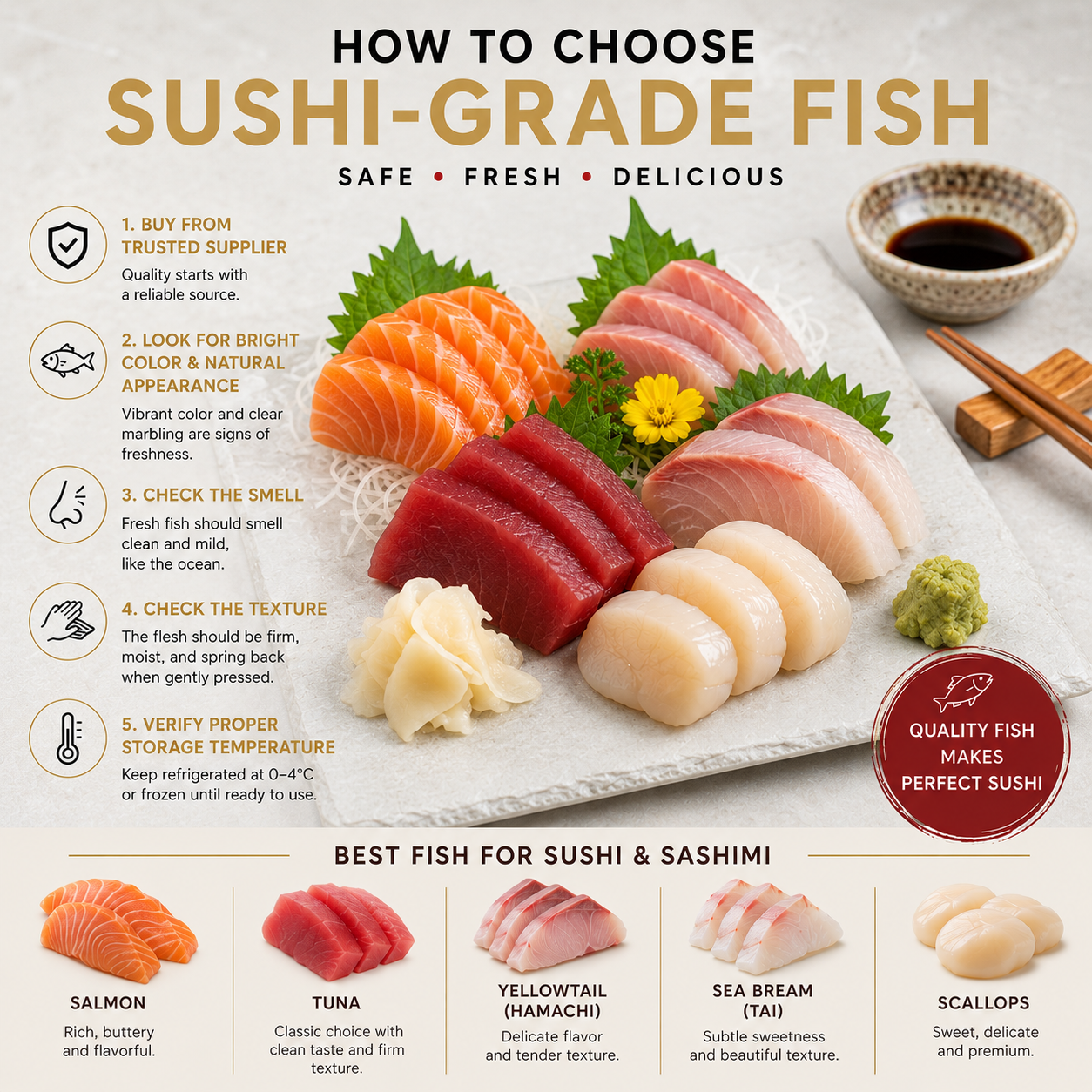
How to Choose Sushi-Grade Fish: A Complete Guide for Safe and Delicious Sushi at Home
If you're planning to make sushi at home, one question matters more than any other: how do you choose sushi-grade fish? Not all fish is suitable for raw consumption, and selecting the right seafood is essential for both food safety and flavor quality.
Choosing the right fish matters
Whether you're preparing sushi rolls, sashimi, poke bowls, or nigiri, understanding what makes fish "sushi-grade" will help you enjoy authentic Japanese cuisine with confidence.
In this guide, we'll explain everything you need to know about choosing sushi-grade fish, the best fish for sushi, and how to store it properly.
What Does "Sushi-Grade Fish" Mean?
Contrary to popular belief, "sushi-grade" is not an official government-regulated term. Instead, it is an industry term used by reputable suppliers to describe fish that has been handled, frozen, and stored according to standards that make it suitable for raw consumption.
- Freshness and quality
- Proper handling during processing
- Strict temperature control
- Appropriate freezing procedures to eliminate parasites
- Safe transportation and storage conditions
The most important factor is purchasing your fish from a trusted supplier experienced in sushi and sashimi products.
Why Is Freezing Important for Sushi Fish?
Many people assume that fresh fish is always better for sushi, but in reality, properly frozen fish is often safer.
Freezing helps eliminate parasites that may naturally occur in some species of fish intended for raw consumption.
Professional sushi suppliers follow strict freezing protocols before fish reaches restaurants or consumers.
This is one reason why many sushi restaurants around the world rely on premium frozen seafood.
5 Signs of High-Quality Sushi-Grade Fish
Buy From a Trusted Supplier
The most important rule is to purchase fish from suppliers who specialize in sushi and sashimi products.
A reputable supplier understands proper sourcing, freezing, handling, and storage procedures required for raw consumption.
Look for Bright Color and Natural Appearance
Quality sushi fish should look vibrant and fresh.
- Bright orange color
- Fine white marbling
- Moist but not wet surface
- Deep ruby-red color
- Firm texture
- No brown or dull spots
- Dry
- Discolored
- Slimy
- Dull or faded
Check the Smell
Fresh sushi-grade fish should smell clean and mild.
- Fresh
- Slightly oceanic
- Neutral
- Strong fishy odors
- Sour smells
- Ammonia-like aromas
If it smells unpleasant, do not use it for raw preparations.
Check the Texture
Sushi-grade fish should feel firm and resilient.
- The flesh should spring back quickly.
- It should not leave an indentation.
- The surface should not feel sticky or mushy.
Verify Proper Storage Temperature
Temperature control is critical for food safety.
Keep refrigerated.
Maintain the frozen chain continuously.
Never leave raw fish at room temperature for extended periods.
Best Fish for Sushi and Sashimi
Some fish species are particularly popular for raw preparations.
Salmon
One of the most popular choices worldwide thanks to its rich flavor and buttery texture.
Sushi rolls · Nigiri · Sashimi · Poke bowls
Tuna
A sushi classic prized for its clean flavor and firm texture.
Sashimi · Nigiri · Maki rolls
Yellowtail (Hamachi)
Known for its delicate flavor and tender texture.
Sashimi · Nigiri
Sea Bream (Tai)
A traditional favorite in Japanese cuisine with a subtle sweetness.
Sashimi · Nigiri
Scallops
Sweet, delicate, and highly appreciated in premium sushi restaurants.
Sashimi · Nigiri
Can You Use Supermarket Fish for Sushi?
In most cases, fish sold for cooking should not automatically be considered suitable for raw consumption.
Unless the supplier specifically confirms that the fish is intended for sushi or sashimi preparation, it is safer to use seafood that has been sourced and handled specifically for raw applications.
Ask your supplier directly whether the fish is intended to be consumed raw.
How to Store Sushi-Grade Fish at Home
Proper storage is essential for maintaining freshness and quality.
Fresh Fish
- Keep refrigerated at 0–4°C.
- Consume as soon as possible after purchase.
Frozen Fish
- Keep frozen until needed.
- Thaw slowly in the refrigerator.
- Avoid repeated freezing and thawing.
Proper storage preserves texture, flavor, and food safety.
Essential Ingredients for Homemade Sushi
Once you've selected your sushi-grade fish, don't forget the other essentials:
Using quality ingredients makes a noticeable difference in the final result.
Make Better Sushi at Home
Choosing sushi-grade fish doesn't have to be intimidating. By purchasing from trusted suppliers and paying attention to freshness, texture, and handling practices, you can safely prepare delicious sushi at home.
Whether you're making sushi rolls, sashimi, poke bowls, or nigiri, selecting premium seafood is the first step toward authentic Japanese cuisine.
Your Sushi Fish Checklist
Choose a Trusted Supplier
Buy seafood from a supplier experienced in sushi, sashimi, and fish intended for raw preparations.
Inspect Quality
Look for clean color, firm texture, a mild aroma, and proper handling.
Maintain Temperature
Keep fresh seafood properly refrigerated and frozen seafood continuously frozen until needed.
Store It Properly
Refrigerate fresh fish promptly and thaw frozen fish slowly in the refrigerator.
Bring Restaurant-Quality Sushi Into Your Kitchen
Pair your sushi-grade fish with quality Japanese ingredients and discover how easy it is to create restaurant-quality sushi in your own kitchen.