
10 Essential Japanese Ingredients Every Kitchen Should Have

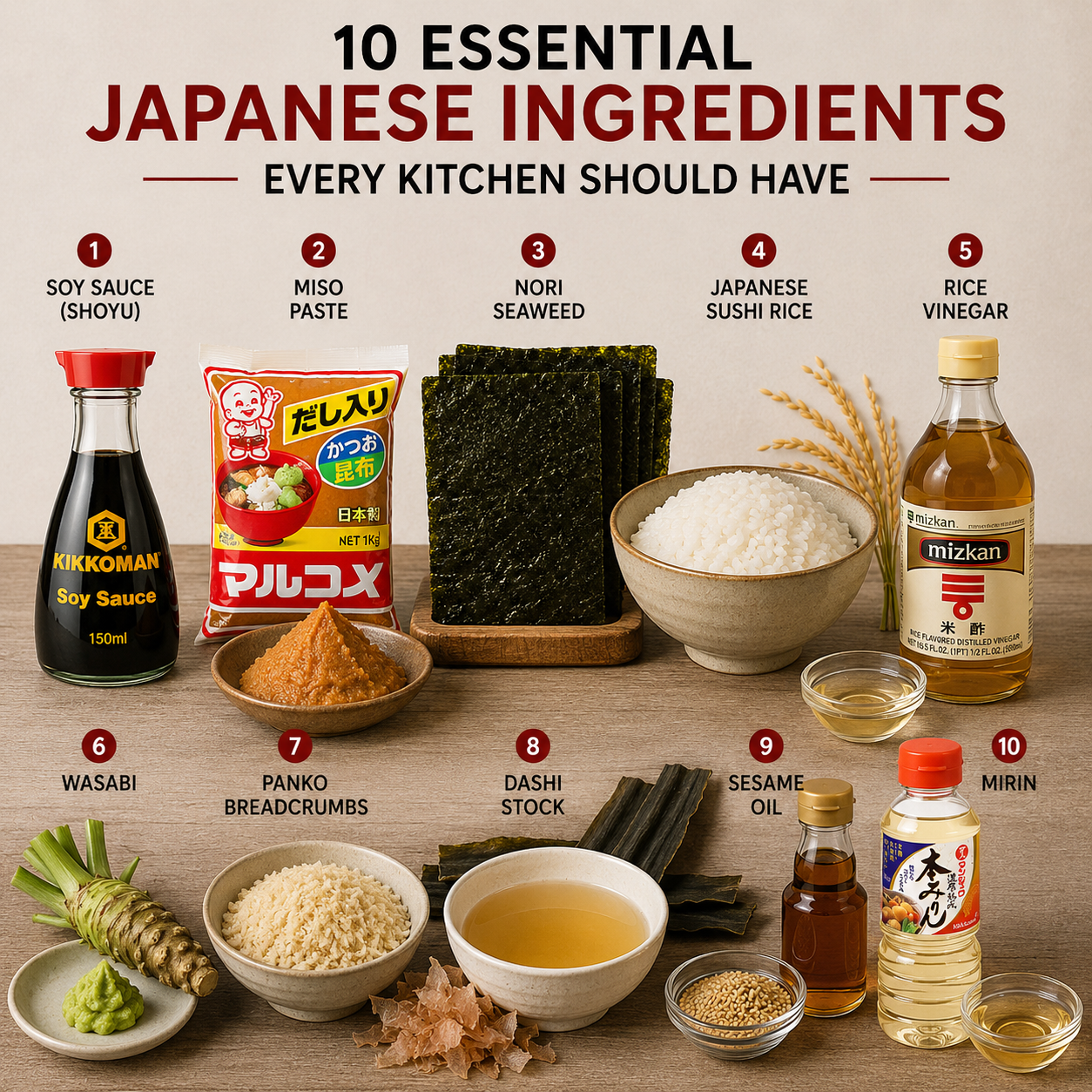
10 Essential Japanese Ingredients Every Kitchen Should Have
Japanese cuisine has become increasingly popular around the world thanks to its fresh ingredients, balanced flavors, and rich umami taste. Whether you're preparing homemade sushi, ramen, rice bowls, or authentic Japanese dishes, having a few essential pantry staples can make all the difference.
Build the foundation of your Japanese pantry
If you're new to Japanese cooking or looking to expand your Asian pantry, these are the 10 essential Japanese ingredients every kitchen should have.
10 essential ingredients
Soy Sauce (Shoyu)
No Japanese kitchen is complete without soy sauce. Known as shoyu in Japan, soy sauce is one of the most versatile ingredients in Japanese cooking and is used in marinades, dipping sauces, stir-fries, soups, dressings, and noodle dishes.
- Light soy sauce for seasoning and dipping
- Dark soy sauce for richer flavor and color
- Tamari for a gluten-free alternative
Miso Paste
Miso is a traditional fermented soybean paste that adds a deep, savory flavor known as umami. It is one of the most important ingredients in Japanese cuisine and is commonly used in soups, marinades, glazes, and sauces.
- White miso — mild and slightly sweet
- Yellow miso — balanced flavor
- Red miso — strong and robust
Nori Seaweed
Nori is the dried seaweed used to make sushi rolls and hand rolls, but its uses go far beyond sushi. It can be toasted and added to noodles, rice bowls, soups, and salads.
High-quality nori should have a deep green color, crisp texture, and delicate ocean flavor.
Japanese Sushi Rice
Authentic Japanese dishes start with the right rice. Japanese short-grain rice has a slightly sticky texture that makes it perfect for sushi, rice bowls, and traditional meals.
Using regular long-grain rice will not produce the same result, especially when preparing sushi.
Rice Vinegar
Rice vinegar has a milder and slightly sweeter taste than many Western vinegars, making it ideal for Japanese cuisine.
It is an essential ingredient for seasoning sushi rice and is widely used in marinades, pickles, and dressings.
Wasabi
Known for its distinctive heat and aroma, wasabi is traditionally served alongside sushi and sashimi. Beyond its role as a condiment, it can add a unique flavor to sauces and seafood dishes.
Panko Breadcrumbs
Panko breadcrumbs are lighter and flakier than traditional breadcrumbs, creating the crispy texture that Japanese fried dishes are famous for.
Their airy texture absorbs less oil during frying, resulting in a lighter and crunchier finish.
Dashi Stock
Dashi is the foundation of many Japanese recipes and is responsible for the subtle umami flavor found in traditional dishes.
It is commonly made from kombu seaweed and bonito flakes and serves as the base for soups, sauces, and noodle broths.
Sesame Oil
A few drops of sesame oil can instantly enhance the aroma and flavor of a dish. Its nutty profile works particularly well with vegetables, seafood, noodles, and Asian salads.
Because of its strong flavor, a little goes a long way.
Mirin
Mirin is a sweet Japanese cooking wine that adds balance, sweetness, and shine to sauces and glazes.
Together with soy sauce and sake, mirin forms the foundation of many classic Japanese recipes.
Build Your Japanese Pantry
Start With the Essentials
Stocking your pantry with these essential Japanese ingredients allows you to prepare a wide variety of authentic dishes at home.
Explore Japanese Cuisine
From sushi and ramen to tempura and rice bowls, these pantry staples give you the foundation for many Japanese favorites.
Perfect for Every Cook
Whether you're a home cook, a professional chef, or simply exploring Japanese cuisine, these staples help recreate authentic Japanese flavors.
Keep Experimenting
With the right ingredients and a little creativity, authentic Japanese cooking is easier than you think.
Start Cooking Japanese Food at Home
Begin with these ten essentials and discover the incredible variety of dishes Japanese cuisine has to offer.